November 2, 2026
A well-organized garage provides more room for projects, equipment, and household storage. According to the National Association of Home Builders (NAHB), nearly 85% of homebuyers rank sufficient garage storage among their top priorities when searching for a new home. Cluttered floors and crowded shelves can make the space difficult to use, while garage cabinets create designated places for tools, supplies, and seasonal belongings. Choosing the right cabinets improves storage capacity, accessibility, and the overall appearance of the garage.
Different cabinet styles offer unique advantages depending on available space and storage needs. Wall-mounted units, modular systems, overhead storage, freestanding cabinets, and workbench storage can all create a more functional workspace. Material quality, cabinet dimensions, and internal features also influence long-term performance.
Wall-Mounted Cabinets
Wall-mounted cabinets make excellent use of vertical space, particularly in garages with limited floor area. By keeping supplies and equipment off the ground, they create more room for vehicles, workstations, and other activities. These cabinets also help maintain a cleaner appearance by concealing clutter behind doors.
Homeowners can choose metal, wood, and composite materials based on their preferences and storage needs. Durability is another important consideration when selecting cabinets. Metal cabinets offer durability for busy workspaces, while wood and engineered materials provide options for coordinating colors and finishes. Adjustable shelving and drawers accommodate everything from small hardware to larger tools.
Modular Cabinets
Modular cabinet systems offer flexibility for garages that serve multiple purposes. Individual units can be arranged to accommodate tools, automotive supplies, sporting equipment, and household items. Their adaptable design also makes it easier to expand storage capacity as needs change.
These systems can combine closed cabinets, open shelving, drawers, and specialized compartments. Frequently used items can remain accessible, while less commonly needed belongings can be stored behind cabinet doors. A consistent finish across the different units helps create a coordinated appearance.
Material selection affects performance and maintenance requirements. Steel cabinets suit demanding environments, while engineered wood and composite options offer different aesthetic and budget considerations. Custom configurations can also make better use of unusual wall dimensions or corners.
Overhead Cabinets
Overhead cabinets provide additional storage without occupying valuable floor space. They are particularly useful for seasonal decorations, camping equipment, and other belongings that are not needed every day. Keeping these items in designated compartments helps prevent work areas from becoming crowded.
Safety and accessibility should guide overhead storage placement. Cabinets must have appropriate structural support and accommodate the combined weight of the units and their contents. Professional installation can help ensure that the mounting system suits the garage's construction and intended storage load.
Lightweight metal and durable composite materials are common choices for overhead cabinets. Coordinating their finish with other storage units creates a consistent look throughout the garage. Well-planned overhead garage cabinets make underused areas more practical while keeping the main workspace open.
Freestanding Cabinets
Freestanding cabinets provide versatile storage without requiring every unit to be permanently attached to a wall. Their variety of sizes makes them suitable for small accessories and bulky equipment alike. Depending on the layout, they can also help divide a large garage into distinct storage and work areas.
These cabinets are available in metal, wood, and composite materials. Metal options suit heavy-duty environments, while wood finishes create a warmer appearance. Adjustable shelves and lockable doors add flexibility for storing different belongings.
When choosing freestanding garage cabinets, homeowners should consider available floor space and the room needed to open doors and drawers. Cabinet dimensions should accommodate stored items without obstructing vehicle access or walkways. Selecting complementary units helps create an orderly and functional layout.
Workbench Cabinets
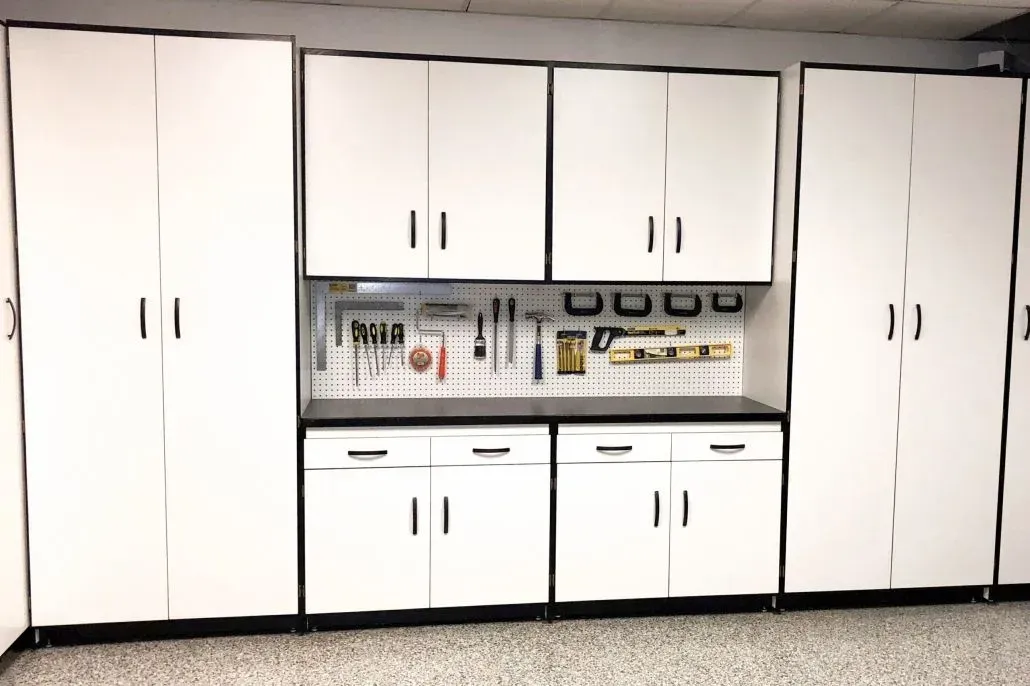
Workbench cabinets combine storage with a dedicated area for projects, repairs, and equipment maintenance. They are useful for homeowners who regularly work with tools or need a consistent place for household projects. Keeping supplies close to the work surface helps reduce clutter and improve accessibility.
Drawer configurations are important for organizing smaller items such as fasteners, measuring tools, and accessories. Larger compartments can accommodate power tools and equipment, while closed storage protects supplies from dust. Durable countertops and sturdy cabinet construction help the workstation withstand regular use.
A well-designed workbench should also account for lighting, electrical access, and sufficient clearance. The cabinets should fit the available area without restricting movement or interfering with other garage functions. Coordinating workbench storage with surrounding garage cabinets creates a unified workspace.
Tall Cabinets
Tall cabinets provide substantial storage capacity while using relatively little floor space. Their vertical design makes them useful for long-handled tools, cleaning supplies, automotive products, and household essentials. Multiple shelves allow belongings to be grouped by category.
Adjustable shelving is valuable because stored items often vary in size. Taller compartments accommodate bulky containers, while smaller sections keep accessories organized. Doors conceal visual clutter and help protect stored belongings from dust.
Material and construction quality should reflect the intended use. Durable finishes and sturdy shelving are important when cabinets will hold heavier equipment or frequently accessed supplies. Lockable options can also provide added security for valuable tools and materials that should remain out of reach of children.
Corner Cabinets
Corner cabinets help make use of garage areas that might otherwise remain underutilized. Their placement can extend storage around adjacent walls without requiring a straight cabinet arrangement. This can be especially beneficial in compact garages where space is limited.
Corner units work well for smaller tools, maintenance supplies, and items that do not require a large dedicated cabinet. Depending on their configuration, they can include shelves, drawers, or enclosed compartments. Coordinating corner cabinets with neighboring units creates a continuous storage layout.
Careful planning is important because corners can be affected by doors, vehicles, and nearby work surfaces. Cabinet depth and door clearance should be considered alongside the overall layout. Properly selected corner garage cabinets increase storage capacity while preserving usable space.
Specialty Cabinets
Specialty cabinets address storage needs that standard shelves and compartments may not accommodate. Examples include dedicated tool drawers, compartments for automotive accessories, and secure units for valuable equipment. These features help keep related belongings together and reduce the likelihood of items being misplaced.
Lockable cabinets are useful for protecting expensive tools and restricting access to potentially hazardous household products. The type of lock, cabinet construction, and intended contents should all be considered when selecting a secure unit. Chemicals and other sensitive materials should be stored according to their labels and applicable safety guidance.
Specialty storage can be incorporated into a larger cabinet arrangement or selected as a standalone unit. Combining secure compartments with general-purpose storage balances accessibility and protection. This creates a more organized garage that supports different activities without allowing equipment and supplies to spread across the workspace.
Selecting the right cabinets begins with understanding how the garage is used and what needs to be stored. Homeowners should consider available wall and floor space, the size and weight of their belongings, and whether they need dedicated areas for tools, vehicles, or household supplies. These factors help determine whether wall-mounted, modular, overhead, freestanding, or specialty units are the best choice.
A coordinated storage plan makes the garage easier to maintain while improving its appearance and usability. With carefully selected garage cabinets, homeowners can establish dedicated places for everyday supplies, specialized equipment, and seasonal belongings. A thoughtful arrangement makes better use of available space and creates a cleaner, more practical environment.
Alpine Cabinet Company Inc can help homeowners explore cabinet options suited to their garage space and storage needs. Consider the cabinet styles, materials, and features that best fit your property when planning an upgrade. The right cabinet system can transform a crowded garage into a more organized and functional workspace.